

Cash is the one number that can end a company while every other metric still looks healthy. The JPMorgan Chase Institute, analyzing nearly 600,000 small businesses, found the median firm holds only about 27 days of cash buffer. A profitable business can still run out of money, which is exactly why a credible cash flow forecast is not a nice-to-have.
The trouble is that “cash flow forecasting software” covers an enormous range. At one end sits a bank-feed app that projects your balance for the next few weeks. At the other sits a full FP&A platform that forecasts cash as an output of the entire business. Choose the wrong category and you either outgrow the tool within a year or pay for capability you never configure.
This is a framework for matching the tool to how your finance function actually works, rather than a ranked list of products. The right answer depends on the kind of forecast you need, so that is where to start.
First, Decide What Kind of Forecast You Need
There are two distinct jobs people call cash flow forecasting, and they point to different tools.
The first is short-term liquidity, often run as a 13-week direct forecast. It tracks expected receipts and disbursements line by line and answers a blunt question: can we cover payroll and suppliers over the next quarter. It is operational, granular, and updated frequently.
The second is a driver-based, three-statement forecast where cash is derived from the income statement and balance sheet. It answers a strategic question: what will our cash position look like in nine months if we hire, grow, and invest as planned. Most finance functions need both eventually, so the tool you choose should not force you to pick one forever.
The Criteria That Actually Matter
1. Does it forecast all three statements, or just cash?
Cash is a result of revenue timing, margins, receivables and payables, and financing decisions. A tool that bolts a projection onto a bank feed can show you the what without the why, which makes it nearly impossible to act on. Forecasting cash properly means forecasting the drivers that produce it.
2. Driver-based or static extrapolation?
Can you model the levers (collections timing, hiring pace, a price change, a new location), or does the tool simply trend history forward? A static projection breaks the moment the business does something it has not done before, which is precisely when you most need the forecast.
3. How do actuals get in?
A forecast is only as good as the actuals it is measured against. Native integration with your accounting system (QuickBooks, Xero, Sage Intacct, or NetSuite) means the forecast refreshes against reality automatically, instead of relying on monthly exports that are out of date by the time they are pasted in.
4. Can it run scenarios quickly?
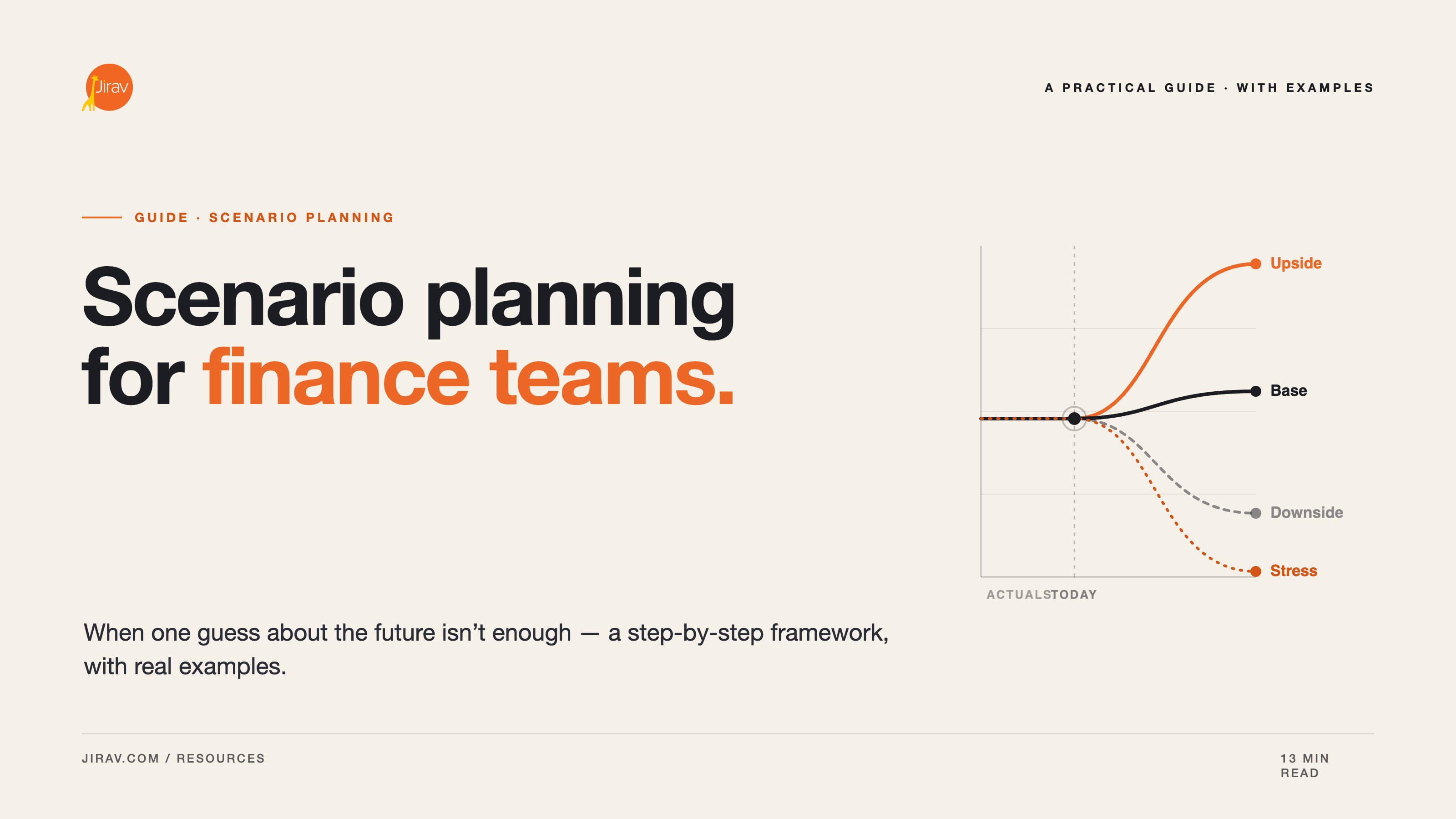
Cash questions are usually scenario questions. What happens to runway if a large customer pays 60 days late, or if you delay a funding round. A capable tool lets you build and compare a downside and an upside in minutes. If every scenario means a new file, you will stop running them. (For the wider discipline, see this guide to scenario planning.)
5. Does it roll forward without rebuilding?
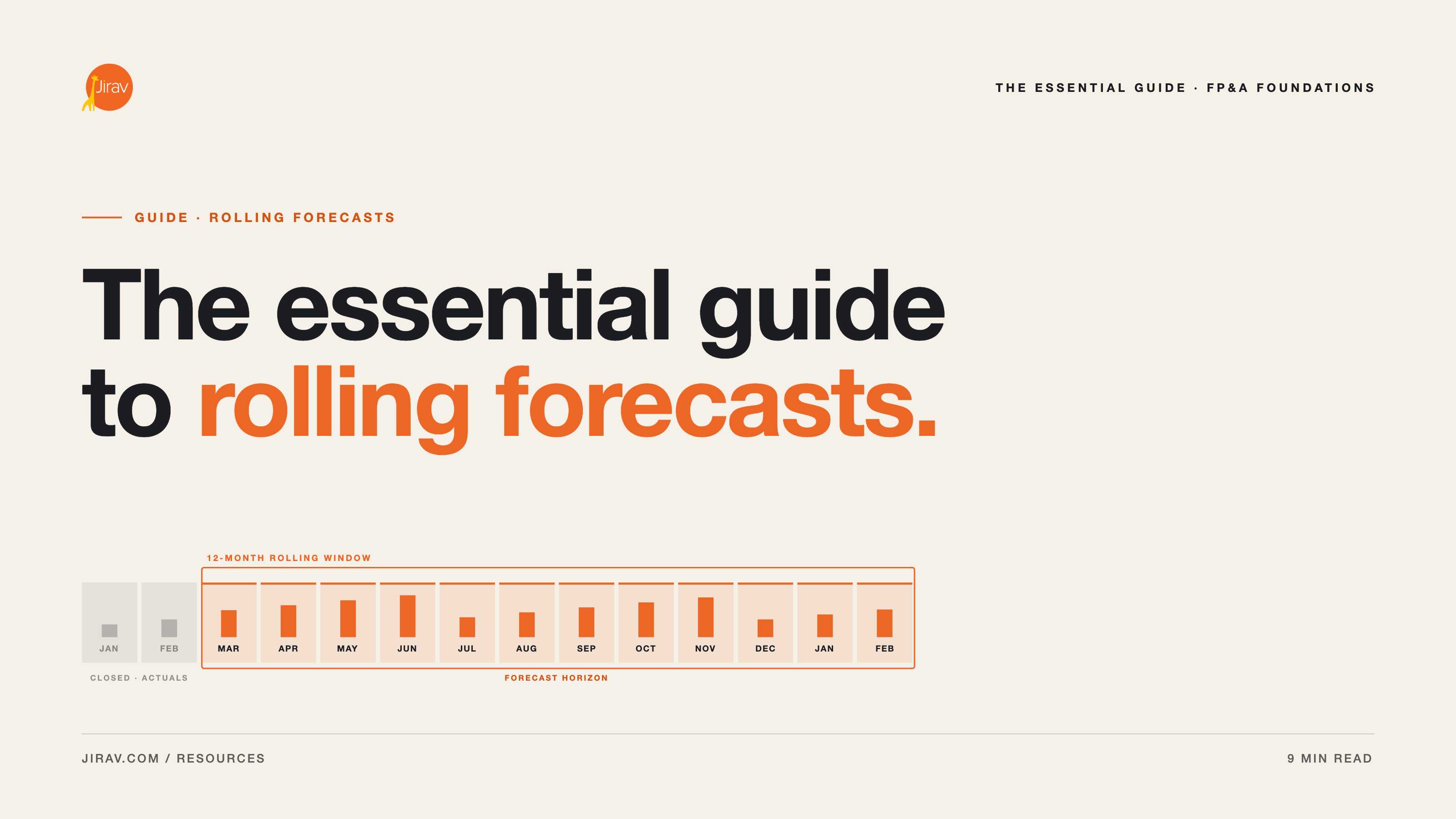
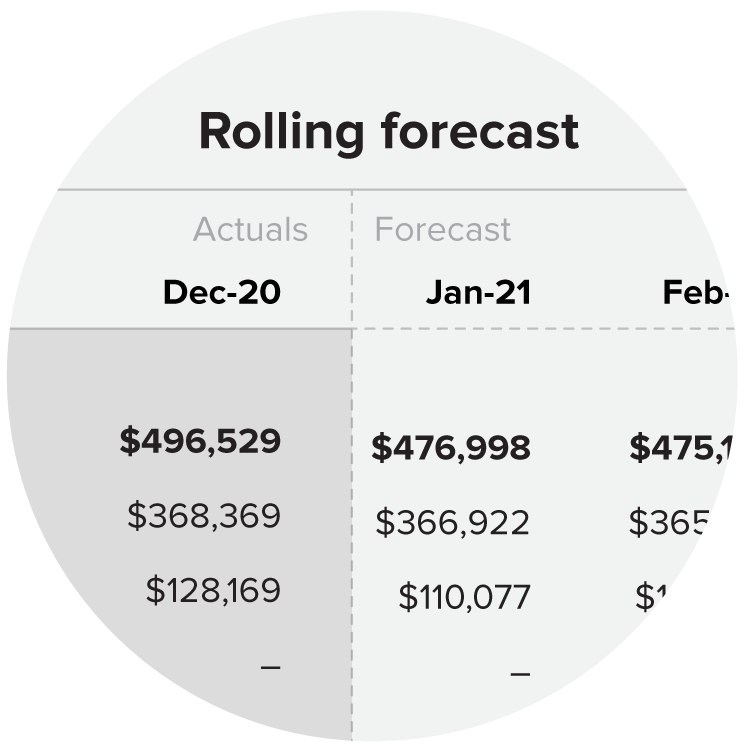
A cash forecast you have to reconstruct every month will not survive a busy quarter. Look for a rolling forecast capability that carries the model forward each period and re-anchors on the latest actuals automatically.
6. Multi-entity and multi-client support
If you run a group with several entities, or an advisory firm serving many clients, consolidation and the ability to apply one consistent model across entities will matter far more than any single feature.
7. Is the output board-ready?
Can the forecast go straight to a board or a client as a clean report or dashboard, or does someone spend an afternoon rebuilding it in slides every month? Reporting that assembles itself is part of the tool's real value.
8. Who can maintain it?
A forecast only one person can update is a single point of failure dressed up as expertise. Time-to-value and accessibility (can a second team member run it) belong on the evaluation list alongside the feature checklist.
The Spreadsheet Question
Most teams start in a spreadsheet, and for a single entity with a patient analyst it can genuinely work for a while. It stops working when the model takes a day to update, the statements quietly stop tying out, or the one person who understands it moves on. If you are still building cash forecasts by hand, the cash flow forecasting best practices worth keeping (short, mid, and long horizons; driver-based assumptions; regular scenario checks) are the same ones a dedicated tool automates for you.
It is also how the discipline is taught at the strategic level. McKinsey's guidance on planning under uncertainty recommends building a driver-based model from revenue all the way to cash, reviewed monthly or weekly when liquidity is at stake. That is exactly the kind of work spreadsheets make slow and a purpose-built tool makes routine.
Where Purpose-Built FP&A Fits
Be honest about the trade-off. If all you need is a 13-week liquidity view for one entity, a lightweight cash app may be the right call. But if you need cash forecasting connected to the whole business, and you expect to grow, a purpose-built FP&A platform is the category that scales with you. Jirav forecasts the income statement, balance sheet, and cash flow together from your drivers, integrates with the major ledgers so actuals flow in, runs scenarios by cloning and comparing them, and rolls forward with Auto Forecast. Cash stops being a separate spreadsheet and becomes an output of the same model that runs the rest of the plan.
A Note for Advisory Firms
For a fractional CFO or FP&A advisory practice, there is one more criterion that outranks the rest: can you standardize a single approach across every client. A tool you can deploy the same way for client after client is what lets you grow the book without growing the chaos. Jirav's accounting partner program is built around exactly that model.
The Bottom Line
The right cash flow forecasting software is the one that matches the forecast you actually need, connects to your data, and survives the person who built it. Start from the job to be done, not the feature list, and the category picks itself. When you are ready to see what driver-based, three-statement cash forecasting looks like in practice, request a demo.